
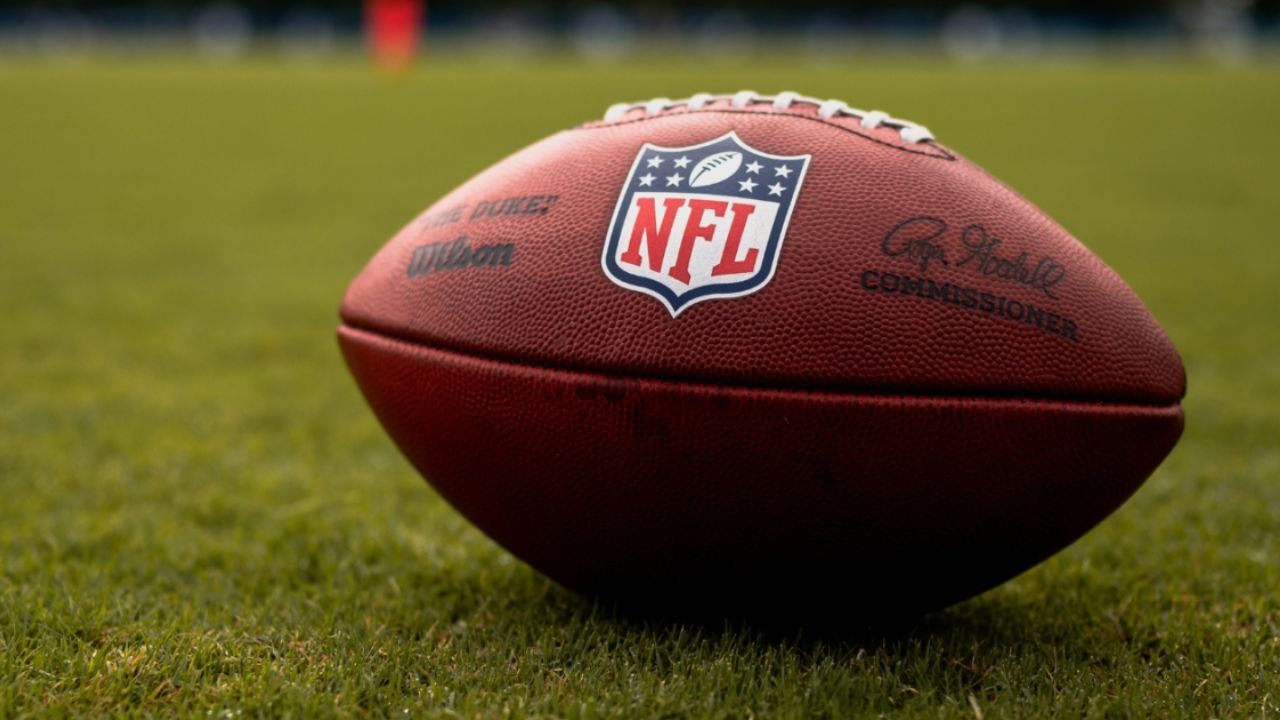
The first thing that should come to mind for someone who wants to play American football is that he should be familiar with the dimensions and weight of the NFL football. If he is a beginner, a player on a part-time basis, or even someone aspiring to make a living out of American football, information about the dimensions of the ball is useful to him.
For instance, one should remember that the dimensions and weight of the ball are not randomly determined. Rather, there are certain rules and regulations that have been enforced to ensure fair play in the game.
What is NFL Ball Size and Weight?
There is a standard size and weight for NFL balls that is regulated under specific rules. NFL balls are slightly dissimilar to normal soccer balls used in other sports. This is because the shape of the ball makes it possible to throw it in a spiral way.
On average, an NFL ball has a length of 11 inches and a circumference of 22 inches near the middle. Also, the weight ranges between 14 to 15 ounces. Such measurements offer an optimal ratio in terms of control and aerodynamic abilities.
Players are able to train effectively and play well in matches owing to such standards. The absence of such would mean a very inconsistent performance level.
Why NFL Ball Size and Weight Matters in Gameplay
The significance of the ball size and weight in the NFL cannot be understated for more reasons than simply measurements. It impacts how the game is played. Take the quarterback, who requires the ball size for proper handling and throwing of the football. Then take the receiver, who requires the ball weight in order to estimate the speed of its movement. Were the ball heavier, its movement would be different. But had it been lighter, handling it against the wind would be much more difficult.
Thus, the right size and weight ensure that players are on equal footing since the playing conditions are identical. Consequently, skill makes the difference.
Official Specifications of NFL Ball Size and Weight
When we talk about official standards, the nfl ball size and weight must meet specific guidelines set by the league. These rules are strictly followed in every professional game.
Here are the main specifications:
- Length: Approximately 11 to 11.25 inches
- Circumference (center): Around 21 to 21.25 inches
- Circumference (ends): Around 28 inches
- Weight: Between 14 to 15 ounces
- Shape: Prolate spheroid (oval)
These measurements ensure that every ball used in a match performs the same way. Consequently, players can rely on consistency during training and competition.
Materials Used in NFL Ball Construction
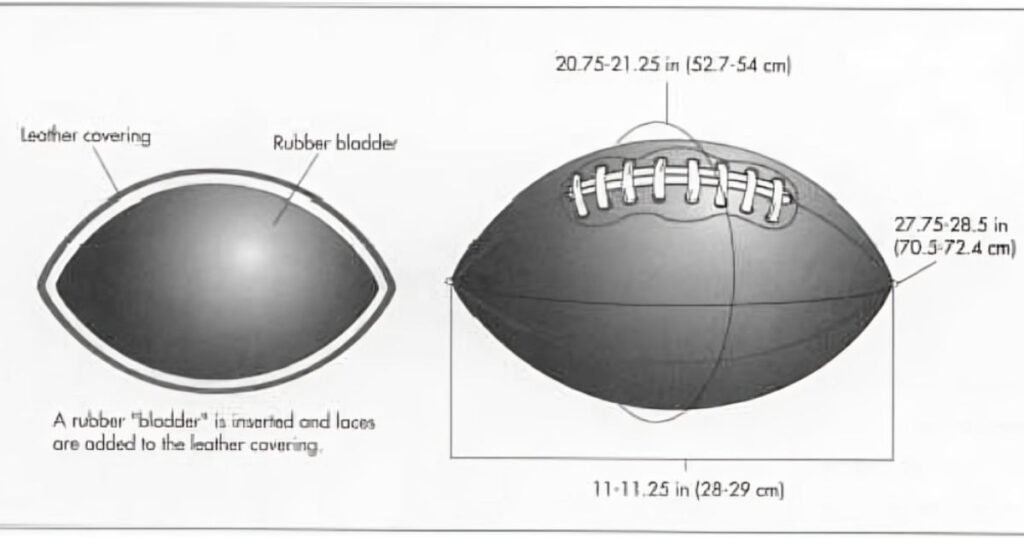
The materials from which the football will be made are also important factors to take into account regarding the dimensions and weight of the NFL ball. The construction of NFL balls uses leather material that is very durable and offers better grip.
Leather can be regarded as a suitable material for football due to the property that gets softer after playing. Synthetic materials are used for making practice balls, which are relatively cheap and weatherproof.
NFL Ball Size and Weight and Inflation Rules
The relationship between the size and weight of an NFL ball is closely related to the level of air pressure in the ball. The correct level of air pressure in the ball helps in ensuring the ball operates optimally during play.
According to NFL rules, a football must be inflated to at least 12.5 to 13.5 pounds per square inch (PSI). Overinflation of the ball will make the ball heavier and harder to hold. Underinflation of the ball will make it too soft.
For this reason, it is the job of the referee to inspect the ball before each game.
Comparison: NFL vs Other Football Sizes
| Feature | NFL Football | College Football | Youth Football |
| Length | 11–11.25 inches | Slightly smaller | Smaller |
| Weight | 14–15 ounces | Similar | Lighter |
| Grip | Premium leather | Leather/Synthetic | Mostly synthetic |
| Usage | Professional | College games | Training/Youth |
This table shows how the NFL football stands out due to its precise design and professional standards.
How NFL Ball Size and Weight Affects Performance
The importance of the ball size and weight is extremely important for all football players. The size of the ball matters a lot for quarterbacks, who have to throw the ball in spirals. Properly holding the ball and throwing it in a spiral requires ideal grip.
Furthermore, for running backs and receivers, the ball weight is very important to maintain balance while catching and holding it.
Also, a proper ball weight matters for kickers, who need to know about distances that they will cover while kicking. Thus, all positions in football require specific ball characteristics.
Testing and Quality Checks
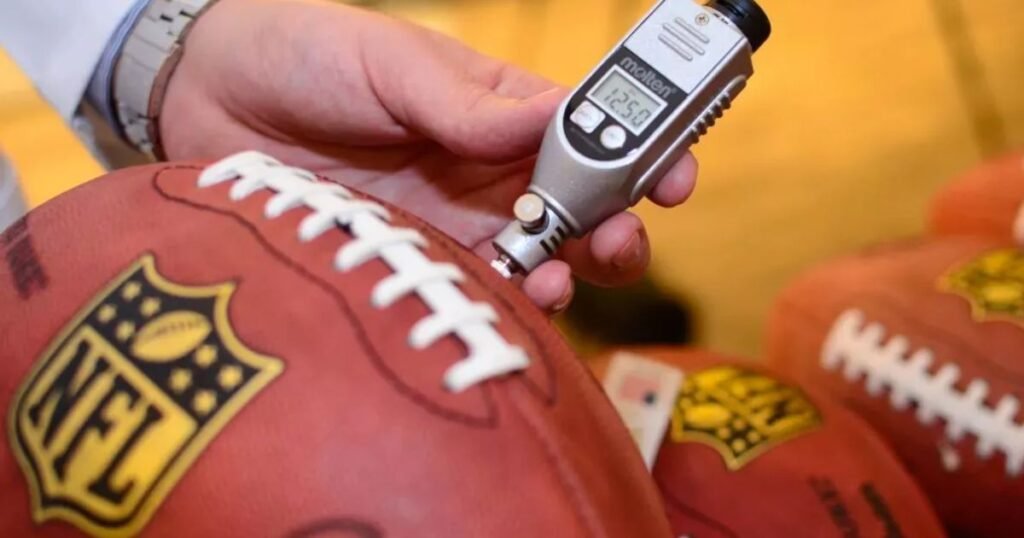
All footballs are subject to thorough testing before being utilized during a game. The size and weight of an nfl football have to be validated as conforming to the standard.
The size and weight are measured, while the air pressure inside the ball is checked. The ball will not be utilized in the game if it fails to satisfy the standards.
This process ensures that there is no unfair advantage gained from the use of substandard footballs in games.
Variations in Football Sizes
While the nfl football specifications in terms of weight and size are standardized for professional level games, there are also balls available for different playing levels. Younger kids, for instance, use lighter balls in their matches.
On the other hand, the training balls that are used might also be different in some cases in terms of their size and weight.
At a professional level, however, all players must always use the standardized balls during training.
Customization Options for Players
Others like to personalize their footballs. Although the dimensions of an official NFL ball cannot be altered during games, practice footballs can be slightly personalized.
Personalizations may include the grip, stitching pattern, or brand name. Personalizing the football makes players comfortable while practicing.
Nevertheless, all footballs used during NFL games should comply with the guidelines set by the NFL.
Top Brands That Manufacture NFL Footballs
There are several top companies manufacturing footballs. Amongst these, Wilson provides footballs to the NFL games. The other companies such as Nike and Adidas are also manufacturing footballs.
These companies ensure that the appropriate size, weight, and sturdiness is maintained. Thus, players are able to have confidence in their equipment while practicing or playing the sport.
Future of Football Design and Technology
The future of football design appears bright. Although there is no scope for major alterations in the nfl football size and weight, there are advancements in the material used and its performance.
For example, there are improvements in the leather coating process and stitching technology. This is done to increase the grip and durability of the football.
Moreover, the inclusion of smart technology in training balls can aid in analyzing performance data.
Conclusion
The nfl ball size and weight is very important in the game of American football. It helps in ensuring consistency and excellence in all games. This applies to all kinds of football players whether amateurs or professionals.
Apart from this, with the right size and weight, it is easy to handle the ball. All this coupled with the right materials makes the football a reliable practice tool.
In summary, learning how to play football begins with learning about the equipment used in playing it. And for any player looking for professional excellence, the nfl ball size and weight is key.
Also Read About: NFL Ball Size and Weight – Beginners and Pros